

What Does the Canada Border Services Agency Do?
The Canada Border Services Agency (CBSA) is responsible for enforcing the laws that govern who and what can enter and leave Canada. With over 14,000 employees, including 6,500 uniformed officers, the CBSA operates at 1,200 locations across Canada and 39 international sites.
Their duties include assessing the admissibility of people and goods, detaining potential threats, removing inadmissible persons, and managing trade agreements. They also protect food safety, collect duties and taxes, and conduct investigations related to immigration and national security. The Canada Border Services Agency (CBSA) is responsible for enforcing the laws that govern who and what can enter and leave Canada. With over 14,000 employees, including 6,500 uniformed officers, the CBSA operates at 1,200 locations across Canada and 39 international sites.
Their duties include assessing the admissibility of people and goods, detaining potential threats, removing inadmissible persons, and managing trade agreements. They also protect food safety, collect duties and taxes, and conduct investigations related to immigration and national security.
It helps to understand where CBSA sits next to IRCC, because the two are often confused. IRCC processes applications for visas, permits, permanent residence, and citizenship. CBSA handles enforcement: border admissibility, compliance with the conditions attached to your status, detention, and removal. A letter from IRCC usually concerns your application. A letter from CBSA usually concerns your compliance and your ability to remain in Canada.

What Is a CBSA Call-In Notice?
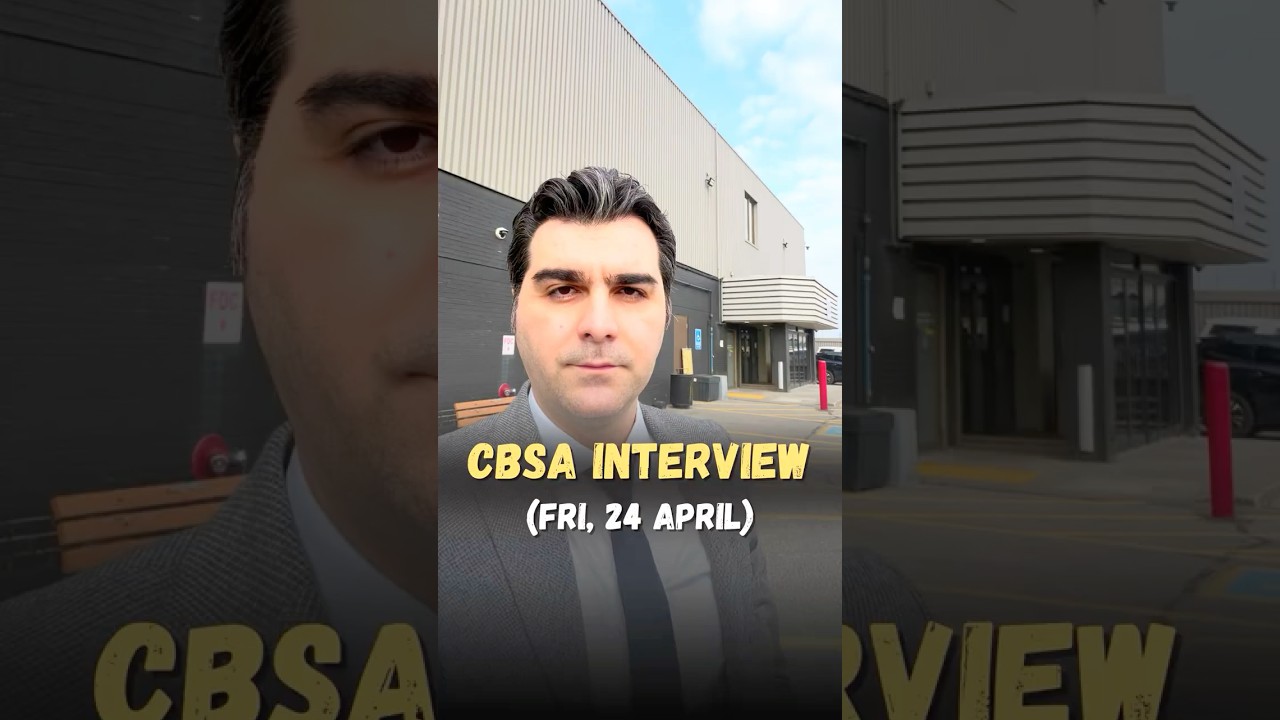
A CBSA call-in notice is an official letter requiring you to attend a meeting at a CBSA office. This notice usually relates to immigration matters, such as scheduling a deportation or addressing questions about your immigration status. Receiving this notice indicates that CBSA needs to discuss an important issue with you, often concerning your eligibility to remain in Canada. The notice normally states the date, the time, the office address, and the documents you are expected to bring. It may reach you by mail, by email, or through a follow-up phone call, which is why CBSA and IRCC must always have your current address on file. A notice that is mailed to an old address is still considered served, and missing the appointment because you never saw the letter creates the same problems as ignoring it.
A call-in notice is not a removal order. It is a request to attend a meeting, and many appointments are administrative: confirming your address, collecting an updated travel document, or reviewing your reporting conditions. That said, the meeting can be connected to removal enforcement, and in some cases a removal order is served at the appointment itself. The correct approach is to treat every notice as significant until you know why CBSA has asked to see you.
In What Circumstances Does CBSA Send a Call-In Notice?
The CBSA sends call-in notices in various situations. These include concerns over your admissibility to Canada, the need to schedule a deportation, or questions about your immigration status.
Notices may also be issued if there are suspicions of involvement in criminal activities, terrorism, or violations of immigration laws. It's essential to respond promptly and appropriately. The most common reasons include:
- Refused claim or application: Your refugee claim, appeal, Pre-Removal Risk Assessment, or immigration application was refused and CBSA is reviewing next steps.
- Updated information: CBSA needs a current address, contact number, or proof of identity.
- Travel documents: CBSA wants to confirm whether you hold a valid passport or travel document.
- Reporting conditions: You were released or granted status subject to conditions and CBSA is checking compliance.
- Loss of status: You overstayed a permit, worked or studied without authorization, or your status expired without restoration.
- Criminality or inadmissibility concerns: CBSA is examining whether you are inadmissible under the Immigration and Refugee Protection Act.
- Section 44 review: CBSA is deciding whether to write a report under section 44 of IRPA, which is the formal step that can lead to an admissibility hearing before the Immigration Division.
- Removal arrangements: A removal order already exists and CBSA wants to schedule your departure.
Some cases carry more risk than others. Treat the appointment as high risk and get advice before attending if any of the following apply to you: you have a failed refugee claim, you missed a previous CBSA appointment, you have a criminal charge or conviction, you currently have no valid status, you have been asked to bring your passport, or you have been told to bring luggage.

Questions That CBSA Asks
During the meeting following a call-in notice, CBSA officers may ask questions related to your immigration status, travel history, personal background, and reasons for entering or staying in Canada.
They might also inquire about your connections to Canada, employment status, and any criminal records. Be prepared to provide honest and clear answers, as these questions help the CBSA assess your situation. Questions commonly asked at a call-in interview include:
- What is your current address and phone number?
- What is your immigration status in Canada right now?
- When did you last enter Canada, and on what document?
- Do you hold a valid passport or travel document?
- Do you have any application, appeal, or Federal Court matter pending?
- Do you have family members in Canada, and what is their status?
- Are you currently employed, and where?
- Are there medical or psychological reasons that affect your ability to travel?
- Are you willing to comply with CBSA instructions?
Officers are also assessing something beyond the answers themselves: whether you are likely to comply and whether you are likely to appear when required. Answer truthfully, keep your answers consistent with what you have already told IRCC, and say clearly that you do not know rather than guessing. If a question touches on criminality, misrepresentation, or inadmissibility, you can say that you would like to speak with a representative before answering further.
What to bring
The notice lists the documents CBSA expects. Beyond that list, it is usually worth preparing:
- Identity and travel documents: passport, permits, and any prior CBSA or IRCC correspondence.
- Proof of pending matters: receipts, file numbers, or acknowledgement letters for any application, appeal, or judicial review or other Federal Court matter currently in progress.
- Ties to Canada: proof of address, employment letter, and documents showing family members in Canada.
- Medical evidence: documentation of any condition affecting your ability to travel.
- A written timeline: your entries, applications, decisions, and status changes in order, with dates.
Do not hand over documents without understanding how they will be used. A document that seems helpful can confirm a fact that works against you.
How to Respond to a Call-In Notice
If you receive a CBSA call-in notice, it's crucial to act quickly. The first step is to consult with an experienced immigration lawyer. They can guide you on how to respond and represent your interests during the meeting.
Depending on the situation, you may need to prepare documents, explain your circumstances, or request a deferral of deportation. Time is critical, so do not delay in seeking legal advice.
A practical sequence:
- Read the notice closely. Confirm the date, time, office address, and the exact documents requested.
- Identify the purpose. A request to bring a passport or luggage signals removal arrangements. A request for proof of address signals a compliance check.
- Get advice before you attend. SEP Immigration is led by Sepehr Falahati, a Regulated Canadian Immigration Consultant (RCIC #R533959), and a representative can review the notice and assess the risk before you sit down with an officer.
- Assemble your documents. Gather everything on the list, plus proof of pending applications and ties to Canada.
- Prepare your timeline. Write out your immigration history so your answers stay consistent under questioning.
- Attend. Arrive on time and bring the complete file.
If you ignore the notice
Not attending does not pause the process. CBSA may treat non-attendance as a failure to comply, which can result in a Canada-wide arrest warrant, immigration detention and a detention review hearing, and a faster move toward removal. It also damages your credibility if you later ask for a deferral or file an appeal, because CBSA and the courts weigh your compliance history when deciding whether to exercise discretion in your favour.
If you cannot attend on the scheduled date
Do not simply miss the appointment. Contact the CBSA office in writing before the date, explain the reason, provide supporting documents such as a medical note, and ask for a new date. Keep proof that you sent the request and any response you receive. A documented request to reschedule is treated very differently from silence.
Submit an Appeal or Review Request
Receiving a removal order after your meeting is not always the final step. You might have legal options to challenge the decision.
Many individuals can submit an appeal to the Immigration Appeal Division (IAD). This process requires strong evidence and a clear legal strategy.
If you do not qualify for an IAD appeal, you can request a Judicial Review. A lawyer files this at the Federal Court.
You must act quickly when pursuing these legal options. Strict deadlines apply to all immigration appeals and review requests.
Missing a deadline can lead to immediate deportation. Legal representation gives you the best chance of pausing your removal.
Two further options exist when removal is imminent, and they are often confused with each other:
- Deferral request: A written request asking CBSA itself to postpone your removal. It relies on reasons such as a pending application filed in a timely manner, a medical condition, an advanced pregnancy, a school year a child needs to finish, or the absence of a valid travel document. CBSA officers have limited discretion here, so the request must be specific and supported by evidence.
- Stay motion: If CBSA refuses the deferral, a motion can be filed at the Federal Court asking a judge to stay the removal while an underlying application is decided. This is urgent litigation and the timelines are measured in days.
A Pre-Removal Risk Assessment may also become available if you face risk in your country of origin and enough time has passed since your last decision. Eligibility rules and bars apply, so the option needs to be assessed against your specific history. You can review the full range of immigration appeal and Federal Court options to understand which route fits your case.
What happens after the meeting
The outcome depends on your file. CBSA may take no immediate action, schedule a second appointment, request further documents, impose reporting conditions, prepare a section 44 report, refer the matter to the Immigration Division, or continue with removal arrangements. In some cases the officer serves documents on the spot. Write down what was said, what you handed over, and what you were told to do next, then send those notes to your representative the same day. If the concern relates to an application still in process at IRCC rather than enforcement, you may instead receive a procedural fairness letter with a deadline to respond.

Immigration Enforcement
The Canada Border Services Agency handles all immigration enforcement across the country. Officers have broad powers to investigate and detain individuals.
Enforcement actions usually begin with an investigation into your status. Officers look for visa overstays, criminal activity, or misrepresentation.
If officers find a violation, they can issue an arrest warrant. They can also hold you in an immigration detention center.
You must comply with all enforcement requests and attend your scheduled interviews. Ignoring these notices will make your situation much worse.
A lawyer can protect your rights during any enforcement action. They will speak to officers on your behalf and explain your options.
The Canada Border Services Agency handles all immigration enforcement across the country. Officers have broad powers to investigate and detain individuals.
Enforcement actions usually begin with an investigation into your status. Officers look for visa overstays, criminal activity, or misrepresentation.
If officers find a violation, they can issue an arrest warrant. They can also hold you in an immigration detention center.
You must comply with all enforcement requests and attend your scheduled interviews. Ignoring these notices will make your situation much worse.
A lawyer can protect your rights during any enforcement action. They will speak to officers on your behalf and explain your options.
Where CBSA believes there are grounds of inadmissibility, the file usually moves through a report under section 44 of the Immigration and Refugee Protection Act. A delegate reviews that report and either allows the matter to end there, issues a removal order directly, or refers the case for an admissibility hearing before the Immigration Division. Knowing which stage your file has reached tells you which remedies are still open to you, which is why the purpose of the call-in notice matters so much.
Received a CBSA Call-In Notice?
Our experienced immigration team is here to help. Don't face this alone, contact us today for expert guidance and to protect your future in Canada.
Frequently Asked Questions
01
Do I Have to Answer CBSA Questions?
Yes, you are generally required to answer CBSA questions truthfully. However, you have the right to consult with a lawyer before responding.
02
02. What Happens if You Ignore a CBSA Call-In Notice?
Ignoring a call-in notice does not make the matter go away, and it usually makes your situation worse. CBSA may treat your non-attendance as a failure to comply with your obligations, which can lead to an arrest warrant, immigration detention, or a faster move toward removal. It also weakens your credibility if you later ask for a deferral or file an appeal. If you cannot attend on the scheduled date, contact CBSA in writing before the appointment and speak to an immigration representative about requesting a new date.
03
Can CBSA Go Through Your Phone?
Yes, CBSA officers can search your phone when crossing the border, but this must be done within the scope of their legal authority, typically to assess admissibility.
04
What Information Can CBSA See?
CBSA officers can examine a personal digital device at the border, but this is not routine. Under current policy an officer needs objective, articulable indicators that border laws may have been contravened, and the examination must serve a border-related purpose. Officers can ask for your password to access data stored on the device, and the device is normally placed in airplane mode so that only local content is accessible, not cloud accounts, remote email, or social media. Refusing to provide the password can result in the device being detained or seized. Note that this power applies at a port of entry, not at a call-in appointment inside Canada.